





- Google has published “The latest AI news we announced in September 2026,” a roundup content summarizing AI-related news announced in September 2026.
- “Google AI Updates” allows users to check the progress of the latest AI features and services at any given time.
- The highlight of September 2026 is “Gemini 4 Argon,” a cutting-edge AI model announced at the end of the month as the first model in the new-generation Gemini 4 AI model family.
On Friday, October 2, 2026 (local time), Google released the September 2026 edition of “Google AI Updates” (The latest AI news we announced in September 2026), which summarizes the latest AI-related news announced in September 2026.
“Google AI Updates,” published periodically by Google, allows users to check the current progress of the latest AI features and services. The highlight of September 2026 is “Gemini 4 Argon,” a cutting-edge AI model announced at the end of the month as the very first model in the new-generation “Gemini 4” AI model family.
In addition, throughout September 2026, Google announced numerous AI-related services and updates, including the announcements of “Gemini 3.8 Flash” and “Gemini 3.8 Live,” the release of the Windows version of the “Gemini” app, and the launch of pre-orders for “Googlebook.”
AI Models
Cutting-Edge AI Model “Gemini 4 Argon”
“Gemini 4 Argon” has been announced as the first model in the new-generation “Gemini 4” AI model family.
Featuring advanced reasoning capabilities and an industry-leading 1-million-token output limit, “Gemini 4 Argon” excels at high-demand tasks such as coding, cybersecurity defense, specialized research in finance and legal drafting, and even autonomous vulnerability patching. “Gemini 4 Argon” is initially rolling out through the “Fairwind Program,” Google’s program dedicated to trusted cybersecurity defense experts.
After improving safety measures based on feedback from early testers, availability is planned to expand to developers, businesses, and general consumers.

 jetstream.blog
“Gemini 3.8 Flash” and “Gemini 3.8 Flash Cyber”
“Gemini 3.8 Flash” has been announced, delivering the highest reasoning and coding performance yet while maintaining the same speed and low cost as “Gemini 3.7 Flash.”
“Gemini 3.8 Flash” significantly improves performance in long-duration software development, multi-step problem solving, and agentic workflows. Released alongside it, the cybersecurity-specialized AI model “Gemini 3.8 Flash Cyber” supports autonomous vulnerability discovery and automatic code patching, and is available to trusted organizations through the “Fairwind Program.”

“Gemini 3.8 Live” and “Gemini 3.8 Live Extended Thinking”
As AI models specialized in voice dialogue, two models have been announced: “Gemini 3.8 Live” for everyday conversation and “Gemini 3.8 Live Extended Thinking” for handling multi-step reasoning without latency.
Both models are rolled out for developers via “Google AI Studio” and the “Gemini API,” and for general users through “Search Live,” “Gemini Live,” and “Google Workspace,” enabling voice control for “Gmail,” “Google Docs,” and “Google Keep.”
“Gemini 3.8 Flash TTS” and “Gemini 3.8 Flash-Lite TTS”
As text-to-speech AI models, “Gemini 3.8 Flash TTS” and “Gemini 3.8 Flash-Lite TTS” have been announced, offering the most expressive voice generation to date.
Instead of choosing from fixed presets, users can create original voices using simple prompts or direct line delivery tailored to specific scenes. For general users, these are deployed in features such as “Gemini Notebook” and “Google Vids.”
“Gemini” App Related
Expansion of “Connected Apps” Support
New supported apps and services have been added to the “Connected Apps” feature in the “Gemini” app.
Productivity tools such as “Airtable,” “Linear,” “monday.com,” and “PandaDoc,” creative tools like “Adobe,” “Picsart,” “Squarespace,” and “Webflow,” and lifestyle services including “Peloton,” “SeatGeek,” and “Experian” have been added, allowing users to complete tasks within “Gemini” without switching tabs. These new apps and services can be used by selecting the apps you want to connect from the “Gemini” settings.
However, many of these are currently only available in English in the United States.
“Lyria 3.5”
“Lyria 3.5,” the most expressive music generation AI model to date, has been announced.
With “Lyria 3.5,” users can generate richer arrangements and more consistent music tracks directly within the “Gemini” app using text prompts or images. “Lyria 3.5” is available globally in the “Gemini” app, and is also deployed in “Google AI Studio,” the AI music production service “Google Flow Music,” and the AI video editing service “Google Vids.”

“Gemini Notebook” New Study Tools
New learning-focused features have been added to the AI research tool “Gemini Notebook.”
Users can efficiently learn complex topics through custom flashcards, diverse quiz formats, and 60-second short video overviews supporting over 80 languages. Additionally, aligning with the new semester season, eligible college students can use the “Google AI” student plan—featuring increased usage limits—for free for 12 months.
AI Agent “CC” Family Edition
The family edition of “CC,” an expanded version of the personal AI agent “CC” offered in “Google Labs” (where users can try out Google’s experimental projects), has begun rollout.
The “CC” Family Edition is assigned a dedicated email address, consolidating family calendar coordination, shared to-do management, and daily scheduling into a single place equipped with privacy management features. The “CC” Family Edition has started rolling out as an experimental preview in “Google Labs.”
Note that the “CC” Family Edition is currently exclusive to the United States. A rollout to Canada, Australia, and New Zealand—where “CC” is already available—has not yet been announced.

Devices Related
Release of Windows Version “Gemini” App
The Windows version of the “Gemini” app has been released, allowing users to instantly summon it using the keyboard shortcut “Alt + Space.”
Following the macOS “Gemini” app released in mid-April 2026, this app can be installed on PCs running Windows 10 or later. It also supports Japan and the Japanese language.
Pre-orders Begin for “Googlebook”
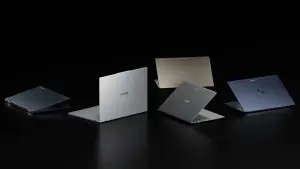
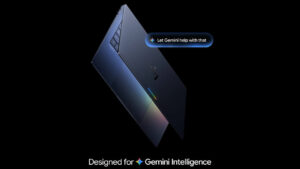
Pre-orders have begun for “Googlebook,” a new laptop brand designed specifically for the next-generation intelligent system “Gemini Intelligence.”
“Googlebook” combines an Android foundation with the ChromeOS desktop infrastructure, enabling seamless integration with Android devices. It is packed with numerous on-device AI features, such as “Magic Pointer”—which lets users ask “Gemini” about anything on the screen via a slight cursor wiggle—and “Rambler,” a voice input feature that organizes off-the-cuff spoken thoughts into structured notes.
It also supports no-code custom widgets and background task processing. “Googlebook” will go on sale in the United States on Sunday, October 4, 2026. A Japanese release has not yet been announced.
Science and Earth Environment
Weather Forecasting AI Model “WeatherNext 3”
As the latest iteration of Google’s flagship weather forecasting AI model, “WeatherNext 3” has been announced as its most advanced and high-precision version yet.
It supports real-time satellite data ingestion, hourly forecast updates, higher resolution, precise precipitation forecasting, and clean energy-related variables. “WeatherNext 3” is integrated into “Google Search,” “Gemini,” “Google Maps,” “Google Maps Platform,” and “Google Cloud.”
High-Resolution Human DNA Map “AlphaGenome Atlas”
The “AlphaGenome Atlas” database has been published, predicting the impact of all approximately 9 billion possible single-nucleotide variants in the human genome.
It covers a number of mutations impossible to verify entirely in a laboratory setting, and because it can be used without coding skills, it contributes to accelerating rare disease research and complex genetics research.
Tracking Methane Emissions from Space with “MAPL-EMIT”
Developed in partnership with the NASA Jet Propulsion Laboratory (JPL), “MAPL-EMIT” was announced as a deep learning AI model that tracks global methane leaks from space.
It detects 50% more emissions than human experts and has discovered over 23,000 previously unidentified methane plumes—including 24 of the top 25 emitting landfills in the world. All data is publicly available on the geospatial data analysis platform “Google Earth Engine.”
AI Computing in Space: “Project Suncatcher”
Under “Project Suncatcher,” an initiative researching AI computing in space, it was announced that the first test satellite will be launched in partnership with satellite company Planet to test how Google’s AI processor “TPU” performs in an actual space environment.
Low-Earth orbit satellites can capture up to eight times more solar energy than on Earth, raising expectations for new possibilities in long-term AI infrastructure.
Complete Mapping of the Fruit Fly Brain
Researchers from Google, the HHMI Janelia Research Campus, and the University of Cambridge utilized Google AI to fully map the brain of an adult male fruit fly for the first time.
It encompasses over 166,000 neurons and approximately 12,000 cell types.
Source: Google (https://blog.google/innovation-and-ai/technology/ai/google-ai-updates-september-2026/)