


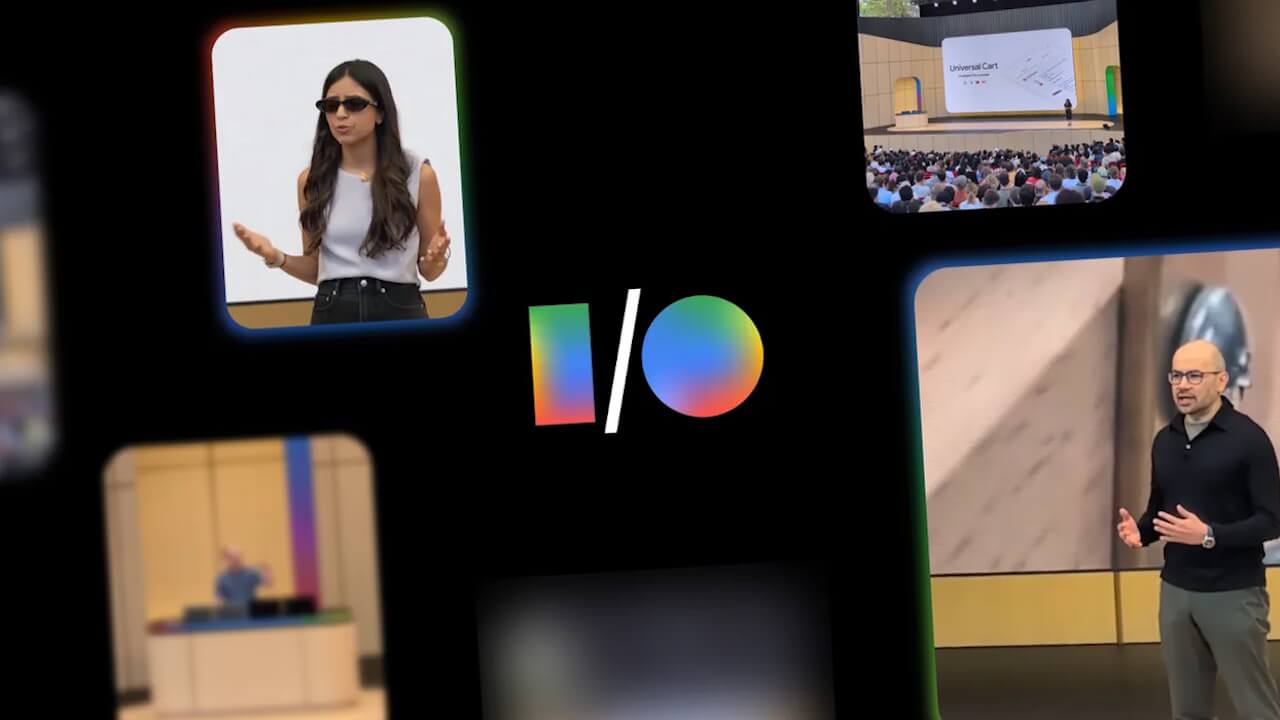

- Google released a highlight article from the “Google I/O 2026” developer event, showcasing new features and services with short videos.
- As usual, “Google I/O 2026” was packed with numerous announcements.
- 12 key highlights from the “Google I/O 2026” keynote are introduced.
On Thursday, May 28, 2026 (local time), Google published a highlight article featuring the new functions and services announced during the keynote of the “Google I/O 2026” developer event, which took place on Tuesday, May 19, 2026.
As always, “Google I/O 2026” was filled with a wealth of announcements. There was a particular focus on AI-related developments; it feels as though the pace of development at Google has accelerated rapidly since the advent of generative AI, with a corresponding expansion in the scope of new features, services, and updates.
This article introduces 12 highlights from the “Google I/O 2026” keynote.
“Gemini Omni”
At “Google I/O 2026,” Google officially announced “Gemini Omni,” a new family of AI models that support not only high-quality video generation combining multimodal inputs such as images, audio, video, and text, but also video editing.
“Gemini Omni” is a new set of AI models that allows for easier video generation and editing through natural conversation. Users can issue instructions to change elements within a video or add new objects while maintaining character consistency and scene context.
It also features the ability to generate a digital avatar—learned from the user’s own appearance and voice—and incorporate it into videos. With templates available, even users without professional equipment or technical skills can easily create and edit videos.
The first model in the family, “Gemini Omni Flash,” will be rolled out to “Google AI Plus,” “Google AI Pro,” and “Google AI Ultra” members worldwide, including Japan, via the “Gemini” app and “Flow.” It is also scheduled to be available for free on “YouTube Shorts.”
Note that while the custom “AI Avatar” creation feature is implemented in “Gemini Omni (Gemini Omni Flash)” within the “Gemini” app, it is currently only available in English-speaking environments and is not yet accessible in Japanese.
Important:
Create and use avatars in the Gemini app – Computer – Gemini App Help
- Currently, avatars are not available in the EEA, Switzerland, or the UK.
- Currently, avatars are supported in English only.

“Gemini 3.5 Flash”
At “Google I/O 2026,” Google officially announced “Gemini 3.5,” the latest family of Google’s AI models.
The biggest evolution of “Gemini 3.5” is the dramatic improvement in its capabilities as an AI agent. As the first release in the “Gemini 3.5” lineup, “Gemini 3.5 Flash” has been launched, delivering state-of-the-art performance in agent processing and coding.
As the name suggests, “Gemini 3.5 Flash” is characterized by its processing speed, achieving response times up to 4 times faster than other AI models, all while maintaining high-quality outputs.
“Gemini 3.5 Flash” is available to all users worldwide, including Japan, within the “Gemini” app. “Gemini 3.5 Pro” is also scheduled for release next month in June 2026.
“Agentic Search”
At “Google I/O 2026,” Google announced “Agentic Search,” which is being introduced to “Google Search.”
“Agentic Search” is an AI search agent feature that allows you to create multiple AI agents that run in the background 24/7 to handle tasks, enabling you to get the most important, up-to-date information quickly. By monitoring all types of web information—such as blogs, news, social media posts, and real-time data related to finance, shopping, or sports—it can retrieve the latest information you desire or answer your questions with precision.
For example, if you are considering moving and have specific criteria, “Agentic Search” will notify you as soon as a property matching those conditions is posted on a rental site. These are the kinds of practical, daily-life functions that are being rolled out.
“Agentic Search” is scheduled to be launched in the summer of 2026 as a feature for “Google AI Pro” and “Google AI Ultra” members.
“Agentic coding in Search”
At “Google I/O 2026,” Google announced “Agentic coding in Search,” a significant enhancement to “Google Search.”
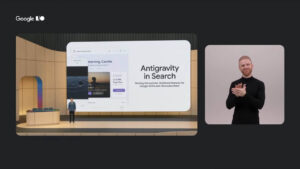
“Agentic coding in Search” integrates the latest “Gemini 3.5 Flash” model and the autonomous code generation platform “Google Antigravity” directly into “Google Search.” It introduces the ability to automatically program and construct content in real-time on the search results page, such as generating interactive custom UIs, simulators, or “mini-apps” for task management, tailored to the user’s questions or goals. For instance, if a user searches to understand concepts of astrophysics or wants to see how a clock works visually, “Agentic coding in Search” generates code on the fly to create unique content combining interactive graphics, tables, charts, and simulations.
This content generation capability within “Agentic coding in Search” is scheduled to be rolled out for free to all users worldwide starting in the summer of 2026.
“Daily Brief”
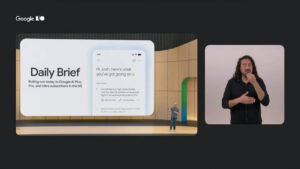
At “Google I/O 2026,” Google officially announced “Daily Brief,” a new productivity feature that provides an email every morning summarizing your daily schedule, key tasks, and other latest information.
“Daily Brief” is a new AI agent based on “CC,” an AI agent feature powered by Google’s “Gemini” that has been available since December 16, 2025, in the US and Canada via the experimental project platform “Google Labs.” Once you opt-in, it integrates with “Gmail,” “Google Calendar,” “Google Drive,” and the broader web to deliver an all-in-one briefing via email each morning.
Furthermore, “Daily Brief” doesn’t just provide a summary; it also suggests actionable next steps, actively guiding the user toward achieving their goals.
“Daily Brief” will be rolled out sequentially to “Google AI Plus,” “Google AI Pro,” and “Google AI Ultra” members in the US. Information regarding a launch in Japan is currently unknown.
“Universal Cart”
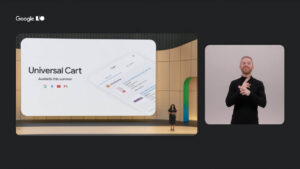
At “Google I/O 2026,” Google announced “Universal Cart,” an intelligent shopping cart feature introduced to “Google Shopping.”
“Universal Cart” is a virtual cart powered by Google’s “Gemini” that supports multiple retailers and services. You can add items to “Universal Cart” from “Google Search,” “Gemini,” “YouTube,” and “Gmail,” and receive timely information about sales and deals related to the items in your cart. As the underlying “Gemini” AI model improves, the convenience of “Universal Cart” will also enhance.
“Universal Cart” is scheduled to be rolled out in the US across “Google Search” and the “Gemini” app in the summer of 2026. It will later be expanded to “YouTube” and “Gmail.”
“Neural Expressive”
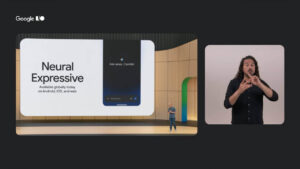
At “Google I/O 2026,” Google officially announced “Neural Expressive,” a new design language being introduced to the “Gemini” app.
“Neural Expressive” is a fresh and engaging design language featuring smooth animations, vibrant colors, new typography, and haptic feedback. With “Neural Expressive” integrated, “Gemini” will incorporate not only long-form text but also rich images, interactive timelines, narrated videos, and dynamic graphics to provide more engaging and easier-to-understand responses.
“Neural Expressive” will be rolled out gradually to the “Gemini” app on web, Android, and iOS worldwide.
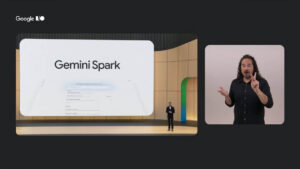
“Gemini Spark”
At “Google I/O 2026,” Google officially announced “Gemini Spark,” a personal AI agent for “Google AI Ultra” members that supports your digital life 24/7.
“Gemini Spark” is an evolved model of the “Gemini Agent” currently available to “Google AI Ultra” members. Based on “Google Antigravity,” the next-generation autonomous AI programming environment developed by Google, it integrates groupware tools like “Gmail,” “Google Docs,” and “Google Sheets.” It performs tasks in the background on your behalf, even when your PC is closed or your smartphone is locked.
“Gemini Spark” also supports Model Context Protocol (MCP) connections with external data and systems like “Canva,” “OpenTable,” and “Instacart.” This list of supported services will continue to expand, with new features added regularly.
Additionally, new features such as text and email sending, custom sub-agent creation, and local browser operation are planned for future release.
Major Update for “Gemini” on macOS
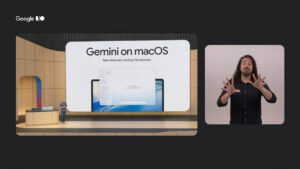
At “Google I/O 2026,” Google announced a major update for the “Gemini” app for macOS (“Gemini on macOS”) that was released in mid-April 2026.
In the summer of 2026, the macOS “Gemini” app will receive the personal AI agent “Gemini Spark” for “Google AI Ultra” members. This will enable automation of desktop workflows and tasks related to local files.
Furthermore, the integration of “Rambler,” a new voice input feature for the “Gboard” app—part of the “Gemini Intelligence” system—is planned for the macOS version of “Gemini.” “Rambler” automatically removes hesitations like “um” and “uh” during voice input, and cleans up redundant repetitions to extract only the key points.
“Android XR” Intelligent Eyewear
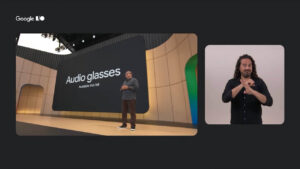
At “Google I/O 2026,” Google officially announced its “Audio Glasses” and “Display Glasses” intelligent eyewear series, powered by the cross-platform “Android XR” OS.
“Audio Glasses” provide user support through voice, while “Display Glasses” are equipped with micro-displays. Both types of eyewear can be operated either by speaking to Google’s “Gemini” AI after the “OK Google” hotword or by tapping the side of the frame.
At “Google I/O 2026,” two “Audio Glasses” collections were unveiled, developed in collaboration with Samsung and eyewear brands “Gentle Monster” and “Warby Parker.” These “Android XR”-powered intelligent eyewear devices are scheduled to arrive in the fall of 2026.
“SynthID”
At “Google I/O 2026,” Google announced the expansion of verification features and partnerships for its digital watermarking technology, “SynthID.”
The “SynthID” verification feature, which validates AI-generated content, will be implemented in “Google Search” (Google Lens/Circle to Search) and “Chrome.” This allows users to easily confirm whether an image in front of them was generated by AI.
Furthermore, Google is introducing “C2PA Content Credentials” verification to identify the modification history of content. This feature detects whether content is in its original state as captured by a camera or what tools were used to modify it. It is scheduled to roll out to the “Gemini” app first, followed by “Google Search” and “Chrome” within the next few months.
As an industry-wide effort, companies such as OpenAI, Kakao, and ElevenLabs will adopt “SynthID” technology for their AI-generated content, and NVIDIA will also utilize the technology in its video models. Additionally, through a partnership with Meta to promote the standardization of “C2PA Content Credentials,” photos and videos taken with the “Pixel Camera” app on Google Pixel devices will be automatically recognized as authentic—with no AI modifications—on Instagram, and appropriately labeled.
Additionally, as part of the technical expansion related to “SynthID,” it was announced that videos recorded with the “Pixel Camera” app on the “Pixel 8,” “Pixel 9,” and “Pixel 10” series will be granted “C2PA” Content Credentials.
“Gemini for Science”
At “Google I/O 2026,” Google announced “Gemini for Science,” a collection of new scientific tools and experiments designed to expand the scale and precision of scientific exploration.
“Gemini for Science” includes advanced reasoning and research capabilities, new experiments based on “Deep Think” and “Deep Research,” and “Science Skills” for connecting agentic platforms like “Google Antigravity” to over 30 major life science databases and tools.
Source: Google (https://blog.google/innovation-and-ai/technology/ai/io-2026-keynote-moment-videos/)