



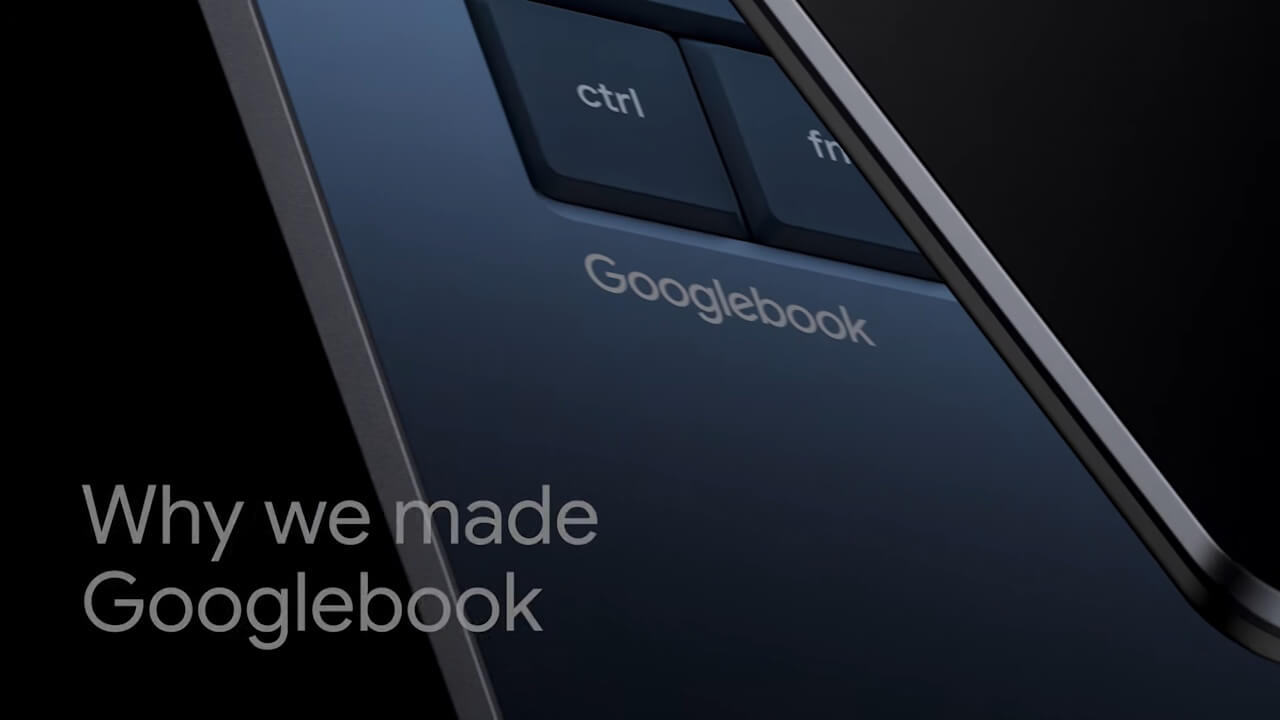

- Dieter Bohn, Director of the Google Platforms & Ecosystems team, has released an official explainer video for the upcoming “Googlebook” series, which is set to launch starting in the US.
- The video reveals details such as “Why we made Googlebook.”
- Since “Googlebook” is a brand-new platform and not yet perfect, it will be continuously improved together with users based on their feedback.
On Friday, October 2, 2026 (local time), Dieter Bohn (@backlon), Director of the Platforms & Ecosystem team at Google, released an official explainer video titled “Inside Googlebook with Dieter Bohn” for the “Googlebook” series—a new laptop brand designed for the next-generation intelligent system “Gemini Intelligence” that is launching soon, starting in the US.
Dieter Bohn’s official explainer video for “Googlebook” sheds light on topics like “Why we made Googlebook.”

Built from the Ground Up
According to Dieter Bohn, “Googlebook” is not simply an extension of existing operating systems like Android or ChromeOS (Chromebook). Instead, it is a brand-new platform built from the ground up, combining insights gained from Android, ChromeOS, and the latest AI technologies.
While “Googlebook” will be released by multiple PC manufacturers, Google itself directly handles software development, user experience optimization, and the delivery of updates.
Seamless Integration with Android
Because “Googlebook” is built on Android technology, it is designed with deep integration with Android devices in mind.
A paired Android device appears as an icon on the taskbar, allowing users to easily access various integration features from there.
With “Cast My Apps,” you can operate apps from your Android device directly on your “Googlebook.” With “Continue on,” you can seamlessly pick up tasks on the “Googlebook’s” larger screen that you started on your smartphone.
Files stored on your Android device can also be browsed and accessed directly from the “Googlebook,” eliminating the need for manual data transfers. It even supports smart search, which understands not just file names but also content to help you find what you’re looking for.
Flagship Models from Five Manufacturers
Initially, “Googlebook” will be launched with flagship models from five manufacturers: Acer, ASUS, Dell, HP, and Lenovo.
The five models include the Acer Googlebook 14, ASUS Googlebook 14, XPS Googlebook, HP Googlebook 14, and Lenovo Googlebook 15. They feature processors from Qualcomm and Intel, with models powered by MediaTek processors expected to be released at a later date.
The base model comes with 16GB of RAM, scaling up to 32GB. It features a quiet design that keeps fan noise down even under heavy loads, and offers up to 14 hours of battery life.
In addition to the full-featured “Chrome” browser, Android and gaming apps—such as “Photoshop,” “WhatsApp,” and “Netflix” with offline download support—run natively.
Gemini Integrated into the System
In “Googlebook,” “Gemini” is not just an add-on feature, but is deeply woven into the entire system.
With “Magic Pointer,” you can simply give your pointer a slight shake to point at an element on the screen and ask questions or give instructions to “Gemini” about it. “Rambler,” a voice input feature accessible from anywhere in the system, automatically corrects hesitations and slips of the tongue while you are speaking, formatting your words into natural sentences for input.
Available as a beta feature, “Create my widget” lets you generate custom widgets simply by describing what you want in words, allowing you to place them right on your home screen.
Linux Environment for Developers and Power Users
“Googlebook” also provides a Linux terminal environment tailored for developers and power users.
This Linux environment is securely isolated from the main system using “pKVM,” Android’s virtualization isolation technology.
Improving Together Through Feedback
Because “Googlebook” is an entirely new platform, some aspects of it are not yet perfect.
As a result, it is designed to evolve and improve alongside users based on their feedback. In other words, much like modern Android-related platforms and AI models, it will continue to advance day by day.
Source: YouTube