



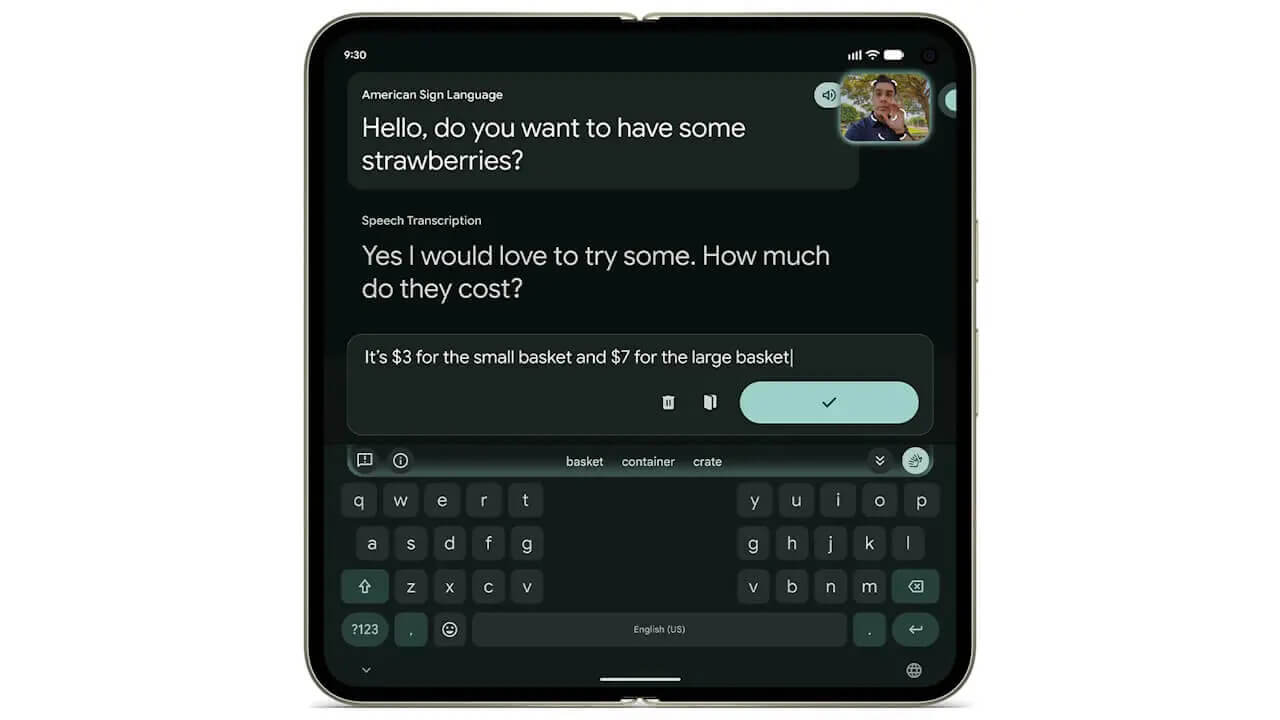

- Android Ecosystem CEO Sameer Samat (@ssamat) shared his thoughts and future outlook on social media on Monday, August 24, 2026 (local time) regarding the “Sign Language Typing” feature featured on the new-generation Google Pixel device series, “Pixel 11.”
- “Sign Language Typing” included in the “Pixel 11” series tracks the user’s upper body, hands, and facial movements in real-time while signing, sends this data as a 2D mapping to a server, and converts it into text.
- Currently under development to expand global language support and roll out to Android devices other than the “Pixel 11” series in the future.
On Monday, August 24, 2026 (local time), Android Ecosystem CEO Sameer Samat (@ssamat) took to social media to share his thoughts and future vision regarding “Sign Language Typing,” featured on the new-generation Google Pixel device series, “Pixel 11.”
“Sign Language Typing” featured in the “Pixel 11” series is a new input feature for the “Gboard” keyboard app. It uses the front-facing camera of the “Pixel 11” series to read sign language and convert it into text.
Specifically, it tracks the user’s upper body, hands, and facial movements in real-time while signing, sends the data to a server as a 2D mapping, and converts it into text. However, it currently only supports American Sign Language (ASL).
For years, speech-to-text conversion has evolved alongside the advancement of mobile network communications. Meanwhile, despite the deaf and hard-of-hearing communities frequently using sign language, typing has traditionally been limited to physical or on-screen keyboards.
To address this, Google began developing “Sign Language Typing” in collaboration with the deaf community and the “AI Sign Language Advisory Committee (AISLAC),” culminating in its release on the “Pixel 11” series. While “Sign Language Typing” on the “Pixel 11” series currently supports only American Sign Language (ASL), development is actively underway to add global language support and expand the feature to Android devices beyond the “Pixel 11” series in the future.
In Japan, sign language broadly falls into two main categories: “Japanese Sign Language (JSL),” an independent language that naturally emerged within the Deaf community, and “Manually Coded Japanese (Japanese-matched sign language),” which follows the grammatical word order of spoken Japanese.