



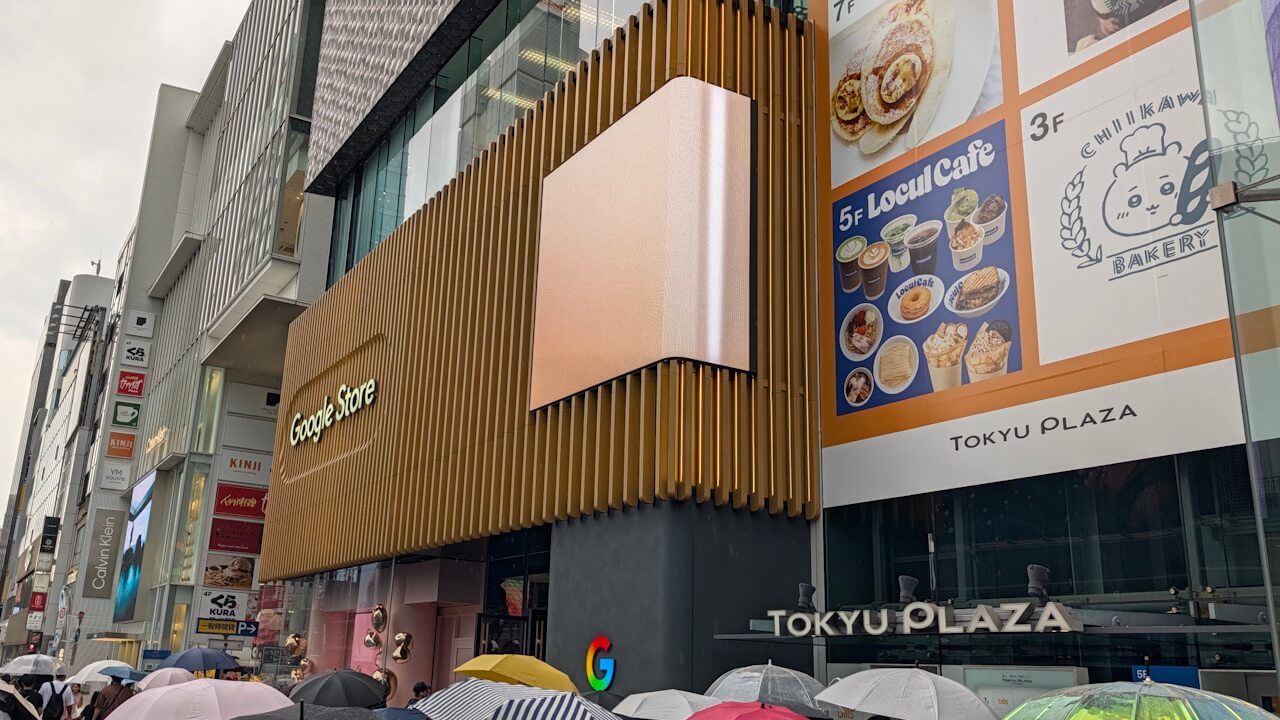

- Google Japan has published an article introducing art pieces made from “scrap materials” on display at “Google Store Omotesando (MAP)”.
- Created by fine artist Norihiko Terayama, two art pieces utilizing scrap materials generated during the production process of Google products are exhibited on the first basement floor of the “Google Store Omotesando”.
- Google approached Norihiko Terayama about the project about three months before the store’s opening.
On Friday, September 11, 2026, Google’s Japanese subsidiary, Google Japan, published an article introducing the art pieces made from “scrap materials” on display at “Google Store Omotesando (MAP)”, Japan’s first flagship “Google Store” which grand-opened on Thursday, August 13, 2026.
The scrap material art at “Google Store Omotesando” was created by fine artist “Norihiko Terayama“. Two art pieces utilizing scrap materials generated during the manufacturing process of Google products are on display on the first basement floor of the store.
Apparently, this was the second time Google commissioned Norihiko Terayama, following his work for the New York store, “Google Store Chelsea“.


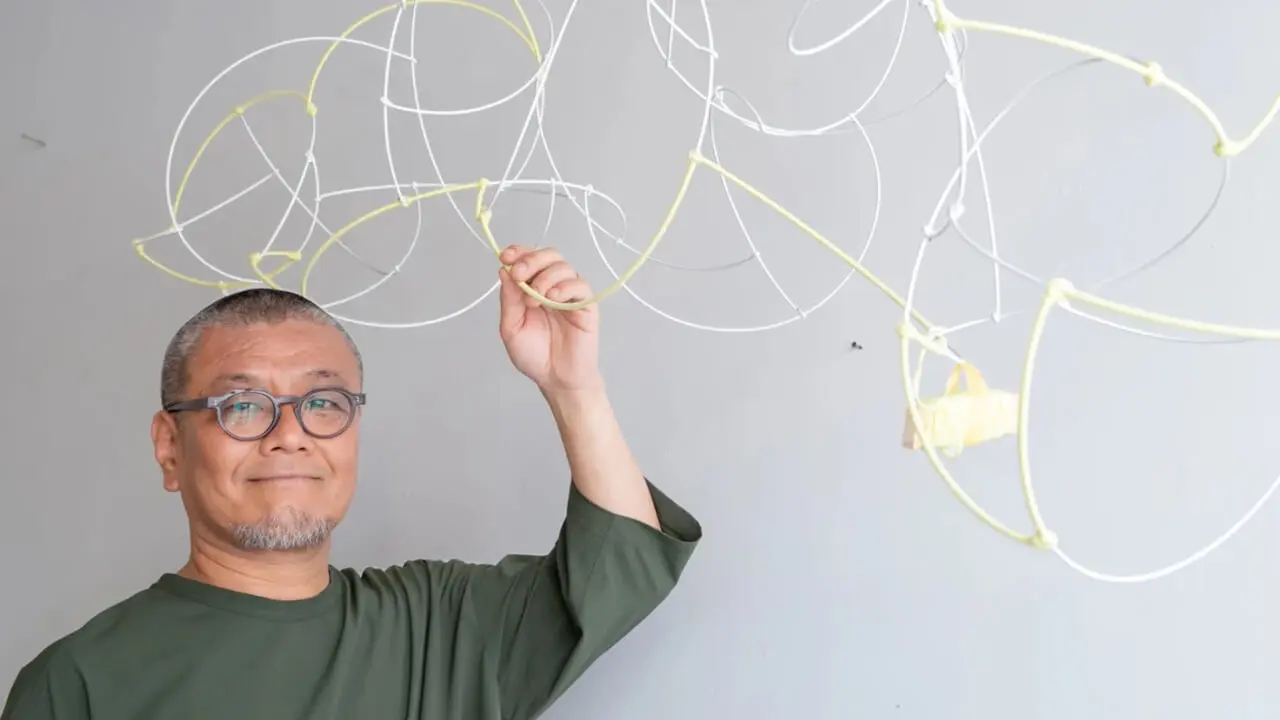
Norihiko Terayama is a fine artist known for his conceptual works utilizing natural materials such as flowers and leaves. After studying design in Japan and studying abroad in the Netherlands, he returned to Japan and founded “studio note“. Today, in addition to his activities as a fine artist, he also works on interior and store design.
His connection with Google began, as mentioned earlier, when he was commissioned to create artwork for Google’s very first physical store, “Google Store Chelsea”. When he first received an email from the design team, he reportedly thought it must have been some kind of mistake. And now, he was called upon once again for the opening of Japan’s first store, “Google Store Omotesando”.
However, Google approached Norihiko Terayama only about three months before the store’s opening, with the condition that he use scrap materials generated during the production process of Google products. The cardboard boxes delivered to Terayama’s studio contained glass and metal fragments (the raw materials for smartphones), packaging paper, and fabric used for smartwatch bands, among other items. It seems there were even some parts whose specific use was unclear.
Terayama first conducted a series of experiments—cutting, pulling, and wetting the materials—to see how the cut edges would fray or shrink. He then proceeded with production, aiming to make the most of the materials in their natural state as much as possible, eventually completing the two art pieces.
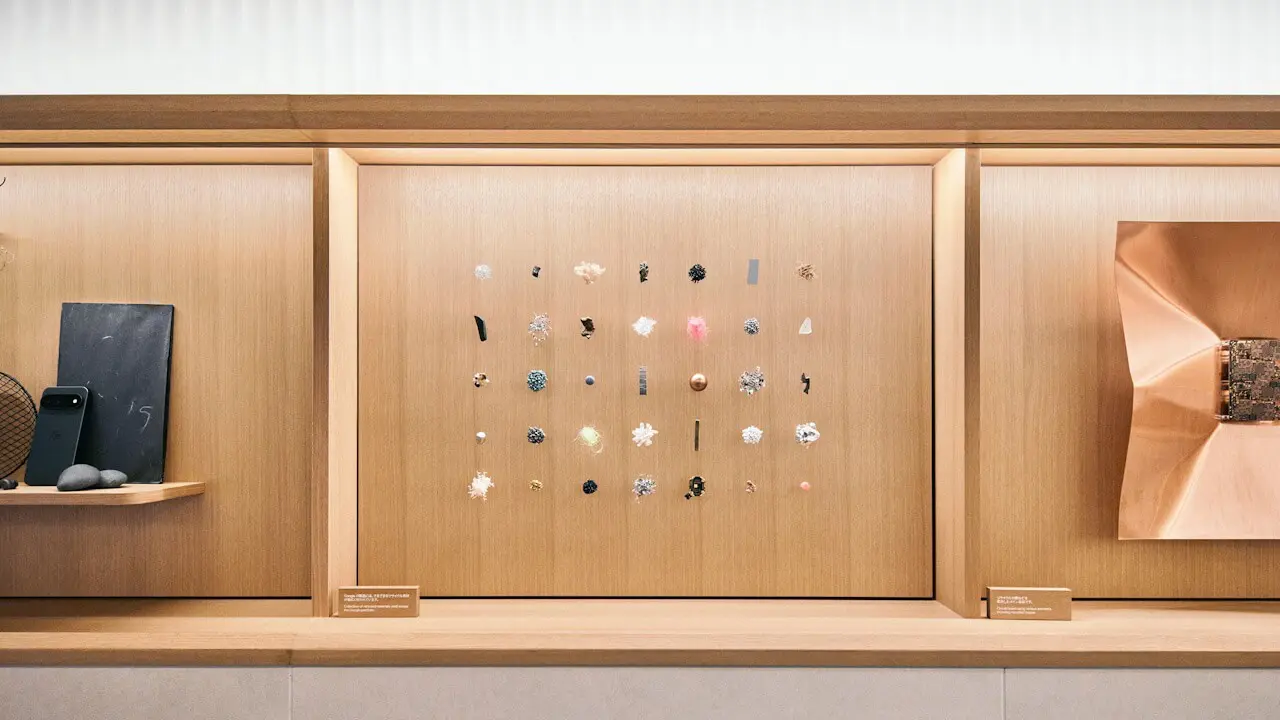
The first piece is an artwork featuring about 30 types of materials, including metal, fabric, and wireless earphone ear tips, pinned to a board. Arranging different materials in an orderly fashion is Terayama’s signature style. However, while he usually focuses on small, lightweight items like flower petals and leaves, this was apparently a challenge involving unfamiliar, hard, and heavy materials such as metal and glass.

The second piece is a three-dimensional sculpture suspended from the ceiling, created by wrapping pale-colored band-like materials one by one around a wire structure. By varying the number of wraps in different areas to create changes in thickness, the piece was shaped into an organic, proliferating, creature-like form. It appears to have been completed entirely through inspiration, without any blueprints or sketches.
Believing that photographs cannot convey the true appeal of his works, Terayama reportedly withheld progress photos and footage of the artwork from the Google team until one month before the opening. Furthermore, on the day of delivery, he felt that the second art piece looked too small against the wall, so he did some additional creation on the spot to make it larger.
So, there is such a story behind the two art pieces by Norihiko Terayama on display on the first basement floor of “Google Store Omotesando”. Or rather, I actually visited “Google Store Omotesando” once, but I didn’t even realize there was a first basement floor. . .
| ■ “Google Store Omotesando” Address |
|
| ■ “Google Store Omotesando” Hours |
|
Source:Google Store