




- Google has published “Google AI Updates March 2026,” a summary of AI-related news announced in March 2026.
- “Google AI Updates” allows users to track the current progress of AI features and services.
- Throughout March 2026, Google announced numerous updates, including the global expansion of “Search Live” and the “Import Memory to Gemini” feature.
On Wednesday, April 1, 2026, Google released “Google AI Updates March 2026,” a summary of all AI-related news announced throughout the month of March 2026.
In the “Google AI Updates” series, which is published periodically by Google, users can check the current progress of AI features and services. In March 2026, Google announced a wide range of features, including the expanded availability of “Search Live” and the ability to “Import Memory to Gemini.”
Streamlining Search and Productivity
Expansion of “Search Live”
“Search Live,” which allows for real-time troubleshooting and information exchange using voice and camera feeds, is now available in over 200 countries and regions.
Additionally, “Canvas,” a workspace designed for organizing projects, coding, and writing, has been rolled out within the “AI mode” in the United States.

Enhancements to “Google Workspace”
Gemini features in Google Docs, Sheets, Slides, and Drive have been enhanced, allowing users to securely integrate and analyze information across multiple files.
In particular, complex data analysis in Google Sheets has become significantly more powerful.
Google Maps Updates
Google Maps has introduced “Ask Maps,” which allows users to ask complex questions in a conversational format, such as “Where can I drink coffee and charge my phone without waiting?”
Furthermore, “Immersive Navigation” has been added to the Android and iOS versions of the Google Maps app, providing a vivid 3D representation of surroundings, including buildings, terrain, and overpasses. Note that “Ask Maps” is currently rolling out in the US and India, while “Immersive Navigation” is available across the US.
 jetstream.blog
Personalization and Migration Features
Expansion of “Personal Intelligence”
“Personal Intelligence” has been expanded to the “AI mode” search, Gemini in Chrome, and the Gemini app across the United States.
Personal Intelligence securely integrates with Google services like Gmail and Google Photos to provide personalized shopping suggestions and create travel itineraries based on actual schedules. For now, Personal Intelligence is limited to users in the US.
“Import Memory to Gemini”
A data import tool, “Import Memory to Gemini,” has been launched, allowing users to migrate data from third-party AI services like ChatGPT, Claude, and Copilot into Gemini.
Device Enhancements
New Features in the March 2026 “Pixel Drop”
In the March 2026 “Pixel Drop” for Google Pixel devices, “Circle to Search” has been upgraded to support multi-object image recognition.
Additionally, Gemini’s “Magic Cue” now provides restaurant suggestions directly within chats. Other new features include the history function for “Now Playing,” and “Express Checkout” and “Lock when phone is not nearby” for the Google Pixel Watch 2, 3, and 4.
 jetstream.blog
Expansion of “Real-time Translation” for Headphones
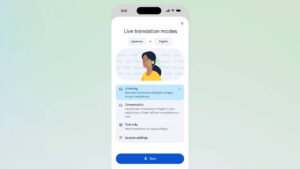
The Gemini-based “Live Translation” feature for headphones is now available in the iOS version of Google Translate.
Furthermore, the Gemini-based “Live Translation” feature itself has been expanded as a beta release to many countries, including France, Germany, Italy, Spain, Thailand, the UK, and Japan.
Health and Well-being
“The Check Up 2026” and Fitbit Enhancements
At the healthcare event “The Check Up 2026,” Google announced $10 million in funding for medical professional education in the AI era and new partnerships with rural health leaders.
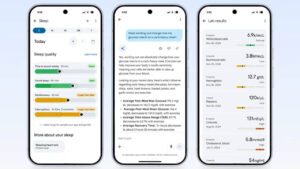
Additionally, Fitbit has announced three updates for its Gemini-powered “Personal Health Coach,” including improved sleep tracking accuracy, CGM (Continuous Glucose Monitor) integration, and medical record integration.
Creativity and Next-Generation AI Models
Music Generation Model “Lyria 3 Pro”
Google has announced “Lyria 3 Pro,” an advanced version of the music generation AI model “Lyria 3.”
With Lyria 3 Pro, users can now specify elements like intros, verses, choruses, and bridges via prompts. Additionally, the maximum length for generated tracks has been increased sixfold, from 30 seconds in Lyria 3 to up to 3 minutes.

Release of “Gemini 3.1 Flash-Lite” and “Flash Live”
Google has announced “Gemini 3.1 Flash-Lite,” the most cost-effective and fastest lightweight AI model, and “Gemini 3.1 Flash Live,” a next-generation voice-first AI model designed for high-quality, real-time interaction.
Gemini 3.1 Flash Live is being made available to developers and also serves as the base AI model for “Gemini Live” and “Search Live.”
“Vibe Coding” Evolution in Google AI Studio
A new coding agent called “Google Antigravity” has been introduced to the multimodal generative AI development platform, Google AI Studio.
Google Antigravity enables users to build production-ready applications with features like database connectivity and multiplayer experiences simply by providing prompts (Vibe coding), thanks to its deep understanding of entire projects.
10 Years Since AlphaGo
AlphaGo’s Achievements and Its Connection to AlphaFold
This year marks the 10th anniversary since AlphaGo, the world’s first AI system to achieve a historic victory over a professional Go player.
AlphaGo’s victory led to the development of the protein structure prediction AI program “AlphaFold,” which solved the 50-year-old protein folding problem. This serves as the foundation for today’s AI-driven breakthroughs in disease understanding and scientific discovery.
Source: Google